EN
 ES
 PL
 TR

CASA MEXICO BLOG
Explore the stories, traditions, and inspirations behind every bottle of Casa México Tequila. From the agave fields of Jalisco to cocktail recipes and cultural celebrations, discover guides that showcase the craftsmanship, heritage, and moments that define the Casa México experience.
-
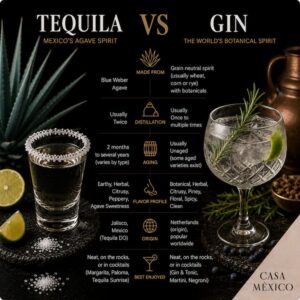
Tequila vs Gin
Tequila and Gin are two globally recognized spirits separated by raw materials, botanical origins, and production traditions. Tequila comes from Agave tequilana Weber, cultivated across five Mexican states under NOM-006-SCFI-2012. Gin draws from a neutral grain spirit redistilled with a…
-
How to Sip Tequila
To sip tequila, follow the seven steps. First, choose the right tequila. Selecting a quality tequila sets the foundation for the experience. Second, use the right glass to intensify the fragrance and flavor, preferably a tulip-shaped glass that concentrates the…
-
Tequila Tasting
Tequila tasting is a structured sensory process that evaluates aroma, flavor, texture, finish, and agave character in every pour. Tequila tasting draws on production knowledge (fermentation, distillation, barrel aging) alongside disciplined technique, giving tasters a precise framework for understanding what…
-
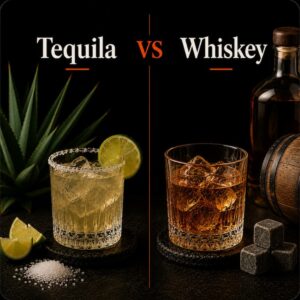
Tequila vs Whiskey
Tequila is a distilled spirit produced from the blue agave plant (Agave tequilana), native to the Jalisco region of Mexico, carrying a protected designation of origin. Tequila expressions range from unaged Blanco to barrel-rested Reposado and Añejo, each delivering distinct…
-
Frozen Pineapple Margarita Recipe and Ingredients
Frozen Pineapple Margarita Recipe and Ingredients combine tequila, pineapple, lime juice, and triple sec into a chilled, blended cocktail poured over crushed ice. Frozen Pineapple Margarita Recipe and Ingredients require 2 ounces of tequila, 1 ounce of triple sec, 1…
-
How to Host a Tequila Tasting
Hosting a Tequila Tasting begins with selecting quality tequilas, organizing tasting materials, and following a structured tasting process that highlights appearance, aroma, flavor, and finish. Tequila Tasting creates an enjoyable gathering that introduces guests to tequila craftsmanship through guided comparisons…
-
Why Alcoholic Drinks Are Set on Fire
Alcoholic drinks are set on fire, explaining why selected alcoholic beverages produce visible flames after ignition. Setting an alcoholic drink on fire begins with ethanol, alcohol concentration, and combustion before examining practical uses in beverages and cooking. Ethanol serves as…
-
How to Cut Down on Alcohol
To cut down on alcohol, reducing the amount or frequency of drinking becomes the main goal without requiring complete abstinence. The approach encourages practical changes that lower alcohol intake, improve daily health, and reduce alcohol-related risks through consistent habits. The…
-
Agave Syrup: Definition, Health Benefits, Uses, Comparison
Agave syrup is a natural sweetener derived from the sap of the blue agave and Salmiana agave plants, the same botanical source used for tequila production. Agave syrup undergoes filtration and enzymatic processing that convert complex carbohydrates into simple sugars,…
-
Alcohol Use During Pregnancy
Alcohol use during pregnancy carries risk at every stage, since ethanol passes through the placenta and reaches a developing fetus directly, with no barrier to filter it out. Alcohol use during pregnancy has no established safe level, a position shared…
-
Alcohol and Weight Loss
Alcohol and Weight Loss describes the relationship between alcohol consumption and changes in body weight through calorie intake, metabolism, fat oxidation, appetite, and daily lifestyle habits. Alcohol and Weight Loss explains that ethanol supplies 7 calories per gram, placing alcohol…
-
Is Tequila a Depressant?
Yes, tequila is a depressant, joining vodka, whiskey, rum, gin, wine, and beer under a single pharmacological class. Tequila has a reputation for high-energy nights, loud music, and quick shots, which creates a common misconception about its actual effect on…
-
Is Tequila Keto-Friendly?
Tequila Keto-Friendly refers to tequila’s suitability for a ketogenic diet because standard tequila contains no carbohydrates and very little sugar after distillation. Tequila Keto-Friendly remains a common topic among keto followers since carbohydrate intake directly influences ketosis and daily macronutrient…
-
Is Tequila a Spirit or Liquor? Complete Guide to Tequila Classification, Production, and Alcohol Content
Tequila qualifies as both a spirit and a liquor, since the two terms describe the same category of distilled alcoholic beverage under different linguistic traditions. A spirit is any distilled alcoholic beverage with no added sugar after distillation. Liquor is…
-
Liquor vs. Liqueur: Key Differences, Alcohol Content, and Uses
Liquor vs. liqueur compares two alcoholic beverage categories that differ in production, ingredients, sweetness, alcohol content, and serving purposes. Liquor vs. liqueur explains why distilled spirits contain higher alcohol concentrations, whereas liqueurs combine distilled spirits with flavorings and sweeteners. Liquor…